Showing posts with label Internet of Things. Show all posts

Thursday, 16 February 2023

Importance of an Integrator at the Edge

Enterprise organizations around the world are looking to the edge to enable better business outcomes. The reason is clear: by processing data closer to its source, enterprises can act on insights faster, improving everything from operational efficiency to the customer experience. With their ubiquitous points of presence and expertise in networking and connectivity, Communications Service Providers (CSPs) are ideally positioned to help enterprises with their edge initiatives. However, to succeed, CSPs need to consider that any edge, be it telecom, network or enterprise, needs an integrator, as edge environments are typically complex, with a mix of vertical-specific operational technology (OT) systems that are often built with proprietary components and code, IT systems and myriad devices (e.g., smart phones, tablets, laptops, etc.). In addition, CSPs need to be able to leverage an open ecosystem so they can quickly access the exact edge technologies and solutions their customers require – and not be locked into a single vendor’s roadmap. As CSPs and enterprises move ahead with their edge journey, we’ve outlined some other key factors they will need to navigate.


Aggregation Ownership is essential for end-to-end solution development. This challenge is a result of the plethora of options in devices, device connectivity (transport, packet core and radio networks and technologies), cloud architectures (Iaas/PaaS/CaaS on Public/Private/Hybrid clouds) and vertical applications (video analytics, AI/ML models, AR/VR, Smart Operations, Connected vehicles and robotics among others).

Enterprise organizational inertia resulting from current state and expertise, extensive and often confusing technology choices and incremental ROI that is spread out over time is another challenge. Consequently, organizations require a trusted partner to address questions such as: Which technology choice is optimal, and what should the edge/cloud configuration be? How do we address the technical debt, if it exists, while enabling edge-native applications? Which use cases do we need to combine to meet the business outcomes?

Service assurance is another key requirement for enterprises arising from the new use cases that span technologies and require network expertise and domain knowledge. The end-to-end solutions require installation & commissioning, performance optimization, and troubleshooting and support, as well as lifecycle management.

Types of Integrators


Enterprise outcomes require different integrator roles to design, build, deliver, deploy and support the new end-to-end edge solution stack. In a broad sense, the stack can be layered as the base infrastructure and connectivity layer, the edge application layer and a service orchestration with application enablement layer to tie the connectivity services with the orchestration services.

Dell EMC Study, Dell EMC, Dell EMC Career, Dell EMC Skills, Dell EMC Prep, Dell EMC Preparation, Dell EMC Guides, Dell EMC Learning, Dell EMC Jobs

The base infrastructure and connectivity stack systems integrator require strong infrastructure technology skills with deep networking domain expertise including standard, protocols and tools, among others. The application stack systems integrator, on the other hand, requires strong application skills with deep domain expertise in vertical markets including open-source software and tools and cloud platforms, among others. Finally, managing and driving the execution of complete enterprise outcomes requires a prime integrator for end-to-end solution enablement with a strong understanding of the network services orchestration as well as vertical market needs.

From one perspective, edge outcomes involve some form of transformation similar to what existed with data center environments in the past but with different constraints now at the edge. At its core, edge outcomes involve data integration, data collection, data management, data security and data movement, all the way up through the physical layers, storage, servers, compute and networking, along with system management and operational management. This is an area where Dell Technologies has excelled in working with our enterprise customers.

Dell Technologies has partnerships with leading companies offering a diverse set of devices and vertical enabling software platforms applicable to a diverse set of business domains such as healthcare, manufacturing, retail and energy and utilities to name a few. In addition, our Open Telecom Ecosystem Lab (OTEL) offers a state-of-the-art platform to foster collaboration for innovation, as well as acceleration of edge use case technology adoption. Our deep internal system integration experience, in addition to strong partnerships with leading industry system integrators, enables us to offer full suite of integration services. These combined capabilities allow Dell Technologies to jointly participate in several ways with CSPs and industry partners to realize the edge compute value chain for enterprises.

Source: dell.com

Friday, 14 October 2022

Get Your Edge Together – with Project Frontier

Dell EMC Study, Dell EMC Prep, Dell EMC Career, Dell EMC Skills, Dell EMC Tutorial and Materials, Dell EMC Edge

There are many ways to characterize edge computing. But boring is not one of them.

I believe we are at an inflection point where edge computing technologies will impact every aspect of our business and personal lives. We know that edge computing is not new. At Dell Technologies, we have been helping customers be successful at the edge for over 20 years. In fact, over 81 percent of Fortune 100 companies use Dell for their edge solutions. In countless conversations with customers, we have witnessed an acceleration of edge deployments and the increased challenges associated with them. To maximize the vast potential of the edge and address these challenges, enterprises will need to get their edge together. This is where Project Frontier comes into play.

What’s the Hype All About?


The acceleration of innovation in applications, technology and data has created a perfect storm.

The reduced costs of sensors, compute and storage have enabled massive growth in data and new types of data. Concurrently, advancements in AI/ML, small form-factor computing, low-latency 5G networking and software-defined “everything” helps us capture, curate and analyze data at the edge and act faster than ever. In addition, multicloud maturity enables tremendous flexibility and scalability. When you add those capabilities to organizational needs for improved productivity on the one hand and to differentiate on the other, it all comes together.

Unique Challenges at the Edge


Unlike traditional IT infrastructure, the business requirements at the edge are varied and constrained due to the distributed nature of the edge. Thus, the requirements are fundamentally different in scale and scope from traditional data centers or the cloud.

The diversity of hardware, levels of ruggedization, constrained spaces and environmental conditions such as extreme temperature ranges and harsh environments, to name a few, create the antithesis of the control you have in a data center. Hardware is connected to critical machinery and supports the Operational Technology workloads and diverse protocols, which increases the complexity of operations. Further, edge infrastructure is typically distributed across many sites and geographically dispersed, which leads to complexity in connectivity, maintenance and support. Compounding these challenges is the fact that qualified IT is not usually present.

With enterprises organically adding edge solutions as use cases present themselves, we have seen a proliferation of solution silos at the edge. This siloed approach creates management complexity, making it almost impossible to achieve economies of scale. Critical concerns over secure operations are exacerbated by the distributed, heterogeneous nature of the edge and increased attack surface for malicious actors. As a result, a breach can have impacts ranging from competitiveness, profitability and human safety.

Require Fresh Approaches to Solving Them


Our discussions with customers have led us to understand that the challenges faced even among diverse industries and businesses are incredibly consistent and that we are well positioned to help them overcome those challenges. To do that, we must re-imagine edge operations within the unique set of constraints at the edge and design around them.

Imagine a solution that works without skilled IT onsite. One that assumes zero trust and could work with limited or no connectivity. A solution with the flexibility to start small with the capability to grow to a massive scale. A solution that embraces multicloud applications running at the edge, enabling access to Dell’s edge ecosystem and partners so we could innovate together.

Introducing Project Frontier, an Edge Operations Software Platform


Today we are proud to announce Project Frontier, our initiative to deliver an edge operations software platform with the goal of unifying edge operations across infrastructure and applications across any industry. Project Frontier is a fresh approach. It thoroughly addresses the unique, complex nature of the edge by re-imagining a better way to do edge operations.

With Project Frontier, customers can:

◉ Simplify their edge operations at scale
◉ Optimize their edge investments
◉ Secure their edge estate with zero trust security

Dell EMC Study, Dell EMC Prep, Dell EMC Career, Dell EMC Skills, Dell EMC Tutorial and Materials, Dell EMC Edge

Project Frontier helps customers by delivering an Edge Secure Environment with the ability to orchestrate applications and manage infrastructure at scale.

The Edge Secure Environment is unique because we’re able to provide a secure and scalable operating environment to run application workloads at the edge. Built on existing, qualified Dell edge hardware ranging from gateways to commercial PCs to servers that are optimized for the platform, you can consolidate your applications by hosting virtual machines (VMs) and containers right at the edge.

Dell is one of the only companies that can ensure a secure supply chain that employs tamper detection to immutable hardware roots of trust and built with cyber-resilient security. Project Frontier’s infrastructure management manages all the devices on the customer’s edge estate remotely, on-premises or in a private cloud and throughout their entire lifecycle. And the “magic” happens in the application orchestration, which can deploy home-grown or off-the-shelf software applications to the edge, data center and cloud using industry-standard templates to define blueprints.

Project Frontier can also be integrated by OEM customers for securing and managing their end-customers’ existing and new platforms while leveraging new offers like the new rugged PowerEdge XR400 server. 

Edge and Project Frontier 


Edge computing is a strategic initiative that businesses across almost every industry can use to gain a competitive advantage. Project Frontier will deliver a horizontal edge operations software platform, developed to help customers achieve their goals to simplify operations, optimize edge investments and secure the edge.

I sincerely believe edge computing represents the future of enterprise technology. Our re-imagined approach to edge operations will unleash the innovations at the edge that enterprises have been striving to deploy. I am very excited about how we at Dell Technologies can make a positive impact in this new frontier.

Source: dell.com

Thursday, 23 June 2022

Run Untrustworthy Data Out of Town

Dell EMC, Dell EMC Study, Dell EMC Material, Dell EMC Career, Dell EMC Prep, Dell EMC Certification, Dell EMC Skills, Dell EMC Jobs, Dell EMC Guides

The Edge: A New Frontier

I used to love shows about the Wild West when I was a kid. People came from everywhere to stake their claims and make their fortunes. They lived on the edge of civilization, trying to create value for themselves and their families. Anything was possible — and that usually meant criminals swaggered around town doing whatever they wanted. That is, until the sheriff showed up and formed a posse to chase them out of town.

Right now, the edge is like the Wild West. The edge is where data is created and acted upon to create immediate, essential value. Edge computing delivers many benefits — such as faster, better insights using more data at the point of creation and consumption — but those benefits don’t come without challenges.

Edge Data: The Good, the Bad and the Ugly

As edge data becomes more central to business decision making and as enterprise data is increasingly combined with external data to enhance analytics and artificial intelligence, it’s more critical than ever to ensure that all the data used for decision making is trustworthy and transparent. Because of this, the industry is recognizing the importance of digital monitoring, reporting and verification, designed to keep bad actors out of your data and out of your decisions.

Like the Sheriff of Deadwood, Dell Technologies has gotten together with the larger open-source community and formed a posse to drive bad data out of town. Project Alvarium, with the initial code seeded by Dell Technologies, is building a framework for a Data Confidence Fabric (DCF) that can deliver data from the edge, data center and cloud to devices and applications — with an industry-first, measurable confidence score.

Dell EMC, Dell EMC Study, Dell EMC Material, Dell EMC Career, Dell EMC Prep, Dell EMC Certification, Dell EMC Skills, Dell EMC Jobs, Dell EMC Guides

DCF: The New Sheriff in Town


DCF fulfills the four principles of data trust — attest, transform, annotate and audit. It provides a standardized way of quantifying, screening, measuring and determining whether data meets your organization’s relevancy and trust standards to deliver more confident insights. Dell’s open-source contribution tracks the trustworthy handling of edge data from its creation and delivery to applications and across different vendors, networks and geographies.

Ensuring the trustworthiness and transparency of data is essential for organizations of all types and sizes. Early use cases for the Dell Technologies revolutionary data confidence solution will likely revolve around industries where edge data is proliferating and trustworthy data is critical for protecting lives and health, such as healthcare, industrial Internet of Things, digital twins, smart cities, military and government.

Find out how you can use the power of open source to put together a data confidence posse and start leveraging more trustworthy data across the wild west of your data estate. Discover more at our edge solutions page.

Source: dell.com

Tuesday, 7 June 2022

Five Ways Modern Retailers Can Win Using Edge

Dell EMC Study, Dell EMC Tutorial and Material, Dell EMC Career, Dell EMC Skills, Dell EMC Jobs, Dell EMC Preparation, Dell EMC News, Dell EMC

It’s Friday afternoon. I’m preparing for a dinner party with friends at my home that evening. As I prep the dessert course, I realize I have forgotten two key ingredients; I need to go to the store and quickly pick them up. I race to the store, breeze through the aisles and grab my items. Success! As I walk to the checkout line, I receive a text from one of my dinner guests stating they are en route to my home. I see a line of people at the store checkout. My mind races… until I remember that this store has cashier-less checkout. I pick up my pace as I push my cart through the exit, knowing the charges will automatically be paid from my account. I place my items into the car and head out. I arrive five minutes before my first dinner guest arrives.

In the last two years, the retail experience has totally changed — and its transformation continues. New customer expectations, spending patterns, savings priorities and shopping behavior are completely redefining the retail experience.

Dell EMC Study, Dell EMC Tutorial and Material, Dell EMC Career, Dell EMC Skills, Dell EMC Jobs, Dell EMC Preparation, Dell EMC News, Dell EMC
To keep up, retailers are rethinking everything. They are using technology for breakthrough capabilities such as meeting customer expectations for convenient, seamless interactions. These include streamlining retail operations, overcoming supply chain disruptions and establishing efficient retail systems in order to stay competitive or even outpace the relentless retail competition.

For retailers, digital transformation is especially critical at the edge. Bringing compute to where data is created and acted on can enhance operational efficiencies and provide shoppers with excellent in-store experiences. While edge computing opportunities abound, retailers can deploy and gain a competitive advantage today with five trending use cases.

1. Autonomous/Cashier-less checkout technology simplifies and speeds transactions. Autonomous store technology placed at the edge enables fully cashier-less stores, where selected items are added to an app-enabled shopping cart, similar to an online experience. Shoppers can then confirm their cart, pay the bill through the app and leave without ever interacting with an associate. Self-checkout or cashier-less stores use sensors and cameras placed throughout the store to scan items as shoppers add them to their carts. This technology uses computer vision and deep learning running at the edge to detect prices and calculate the bill In turn, this allows shoppers to pay and exit without visiting a cashier, and staff can be refocused to improve customer service and inventory management.

2. Customer behavior analytics informs customer-centric offers. Advanced analytics at the edge helps retailers understand metrics, such as how frequently a shopper visits a store, the products they prefer and how they respond to marketing, sales and customer service. This helps retailers create more targeted offers.

3. Checkout accuracy decreases customer wait times and reduces shrinkage. Advanced artificial intelligence (AI)–enabled video and scanning systems placed at the edge can increase self-checkout accuracy to make the experience faster for customers, flag errors and suspicious transactions to reduce loss.

4. Loss prevention helps preserve profits. Monitoring at the edge, powered by AI and analytics, can prevent loss, catch pricing errors and help retailers analyze where loss is occurring so they can prompt cashiers, stockers and customer service to take appropriate actions.

5. Computer vision boosts operations and enhances customer experience. Image recognition enables shoppers to scan a product with an app and see current inventory and similar product suggestions and even buy the product and have it brought to them by a store associate. This can help retailers retain sales from shoppers who compare prices online.

Sensor or camera-based customer analytics can detect in-store traffic patterns to help retailers see which promotions are most successful. Known as computer vision, this capability can also count shoppers and study customer behavior anonymously, tracking the customer journey throughout the physical store and enhancing it to improve the in-store experience.

These five use cases are transformational to customer experiences and help retailers win the hearts, minds and loyalty of customers. As a result, digital transformation at the edge holds enormous opportunities for the retail industry. Dell Technologies offers a range of solutions that enable business intelligence and data-driven decisions at the retail edge to help enhance the customer experience and increase operational efficiency to gain an edge over competitors.

Source: dell.com

Sunday, 22 May 2022

AI – Enabling 5G Superpowers?

Dell EMC Study, Dell EMC Career, Dell EMC Guides, Dell EMC Learning, Dell EMC Preparation Exam, Dell EMC Tutorial and Materials

If there is one thing to recognize about 5G is that, above all the hype, 5G has ignited Enterprise’s edge transformation plans. It shook the market with its speed records and shallow latency figures. But it was also able to convince critical business operations of its security and reliability attributes. Now, every company we talk to is working on incorporating process automation and using data for fast and consistent decision-making.

Jack of All Trades – Master of Them All

5G is a big step forward in all dimensions (speed, latency, number of users, security, available spectrum, flexibility), and has the capability to become the target architecture for the years to come. Expecting consolidation gains, many CSPs will converge legacy networks and repurpose spectrum assets in favor of 5G.

5G’s success results from the wider spectrum availability and the intelligent way 3GPP planned its releases and designed its flexible logical Tx/RX frames, allowing it to independently scale capacity, throughput, and latency. This flexibility allows it to adapt and deliver different connectivity services, always at a very effective cost.

5G’s also benefits from more advanced modulation techniques, modern electronics and its rumble approach to “Openness” – 3GPP created 5G to be open and leverage contemporary innovation streams such as Edge computing, and open IP protocols, CUPs, and open APIs. Proof of this are 5G’s expected longevity and sequential releases where 3GPP keeps adding new functionalities to enable it to serve different use cases.

AI for 5G and 5G for AI

Artificial intelligence is intrinsically embedded in many of 5G’s signal processing tasks, traffic prediction algorithms and self-optimization routines. With the use of AI, 5G networks can predict traffic patterns and electronically focus its antenna array accordingly, assuring that network resources will be always used effectively. It can also intelligently power off parts of the network equipment to save energy.

Advanced scheduling mechanisms and noise cancellation processing tasks are also 5G processes that rely on AI. By combining big data, IoT and AI, disruptive technology advancements start to revolutionize traditional industry verticals.

At the time CSPs and hyperscalers deploy the edge network to implement 5G networks, by nature, they will be concomitantly enabling the necessary computing infrastructure to host AI workloads. The available edge cloud resources will serve different players, with abundant computing and connectivity resources at the edge. Innovative business models will derive from this flexible resource assignation generating a matrix of innovative cooperation models.

At Dell Technologies, we see the combination of 5G, AI and data connectivity at the edge as a transformative platform to enable new possibilities for enterprises, governments and society in general. AI will allow machines and systems to function with intelligence levels like that of humans. 5G will connect sensors and devices at speed while AI simultaneously analyzes and learns from data, enabling real-time feedback loops.

Trends in GPU/FPGA/Other Edge AI Acceleration Approaches

When it comes to edge AI Acceleration options, there are several distinct options available. This allows for a tiering of acceleration capabilities, fitted to the demands of the AI/ML application while taking into consideration other factors like cost, space, power consumption and heat dissipation.

Additional AI/ML capabilities are also being integrated into upcoming CPU Architectures of various chipset vendors. As an example, Intel’s upcoming 4th Generation Xeon Scalable Processor will include a new instruction set for deep learning performance, with matrix multiplication instructions that promise to deliver much improved AI/ML performance available by default. This will enable the movement of AI/ML functions to the edge, without the need for add-on accelerators, such as GPUs or FPGAs, and do so in a power and space-efficient manner.

For increased AI/ML processing at the Edge, though, PCIe Accelerator Cards are the way to go. As an example, Dell’s edge/Telecom tailored PowerEdge XR11 and XR12 are ruggedized, short depth, NEBS Level 3 and MIL-STD certified servers, supporting the expansion of AI/ML capabilities via PCIe, providing a tiering of acceleration options for the edge.

3GPP Standardizes 5G AI-based Procedures

3GPP wants to ensure 5G becomes a relevant part of this AI/ML innovation fabric at the edge, and seamlessly integrates into the broader edge cloud in a more extensive manner.

Via a Technical Report (TR), TR 22.874, Technical Specification, 28.105, and the new TS 28.908, 3GPP will provide a standard approach to the complete lifecycle management of AI/ML Enabled Functions in the 5G network.

Complex network capabilities will be offloaded to AI/ML models to leverage the ability to constantly adapt and optimize for the latest network conditions. Network Planning, Management, and Performance Optimization (including SON) shows great promise of increasing  network performance and reliability while reducing the overall costs of network administration.

Also, by using open northbound open API interfaces, 3GPP will enable the formation of an ecosystem of SW developers working with supported development tools extensible for AI and ML functions.

Technology for Good

A new data-aware society is forming at the edge, with 5G and AI capabilities enabling not only unprecedented productivity levels but also long aimed employee safety standards and environmental sustainability.

Thoughtful applied technology has the power to improve operational processes in retail, manufacturing, banking, transportation, healthcare and government. It will reshape modern society’s expectations and possibilities, allow us to dream about a better world and help address some of humankind’s more challenging issues. The power of technology to transform our lives has never been so realistically reachable, but it’s still a race against time.

Source: dell.com

Saturday, 21 May 2022

Reducing the Data Gravity Pull

Dell EMC Study, Dell EMC Career, Dell EMC Skills, Dell EMC Preparation, Dell EMC Jobs

Flashback to when I was 10 years old. I’m trying to assemble two 11-person football teams on my football field designed rug using my toys as the players. I pull out old Star Wars figures, Evil Knievel, Stretch Armstrong and Bionic Man from the bottom of my toy chest. Luckily, my older sister didn’t throw away her old Barbie and Ken dolls, since I need them to complete my team; they made outstanding cornerbacks. While I might have changed my interest from action figures to sports, I’m so glad my sister and I didn’t get rid of our toys after only playing with them a few times.

This scenario is true. It is also a great analogy for why we collectively have a growing data gravity problem. I’ve made it my professional mission to help companies proactively solve their respective data gravity challenges (something akin to organizing and cleaning up my toy collection) before they become a completely unwieldy, data hoarding problem.

What is Data Gravity?

The concept of data gravity, a term coined by Dave McCrory in 2010, aptly describes data’s increasing pull – attracting applications and services that use the data – as data grows in size. While data gravity will always exist wherever data is collected and stored, left unmanaged, massive data growth can render data difficult or impossible to process or move, creating an expensive, steep challenge for businesses.

Data gravity also describes the opportunity of edge computing. Shrinking the space between data and processing means lower latency for applications and faster throughput for services. Of course, there’s a potential “gotcha” to discuss here shortly.

As Data Grows, So Does Data Gravity

Data gravity and its latency-inducing power is an escalating concern. As the definition of gravity states, the greater the mass, the greater the gravitational pull. The ever-increasing cycle of data creation is staggering and is spurring a sharp rise in data gravity. Consider these estimates that state by 2024, 149 zettabytes will be created every day: that’s 1.7 MB every second.

Dell EMC Study, Dell EMC Career, Dell EMC Skills, Dell EMC Preparation, Dell EMC Jobs

What is a zettabyte? A zettabyte has 21 zeroes. 

What does 21 zeroes equate to? According to the World Economic Forum, “At the beginning of 2020, the number of bytes in the digital universe was 40 times bigger than the number of stars in the observable universe.”

Consequently, this data growth forecast is impactful and will continue to impact data gravity – in a massive way. As with most situations, data gravity brings a host of opportunities and challenges to organizations around the world.

Data Gravity’s Hefty Impact on Business


Data gravity matters for two reasons: latency and cost. The heavier the data, the more latency increases. More latency means less throughput – which increases costs to organizations. Reactive remedies create additional expense for businesses because moving data is not easy or cheap. In fact, after a certain amount of data is amassed, movement may not be feasible at all.

A simplified view of data gravity’s “snowball effect” is shown here:

Dell EMC Study, Dell EMC Career, Dell EMC Skills, Dell EMC Preparation, Dell EMC Jobs

Balancing Data Gravity


Data gravity, however, is not all bad. It all depends on how it’s managed. As with most things in life, handling it is all about balance. Consider two scenarios in the context of data gravity: centralized data centers and data creation at the edge.

◉ Centralized data center – In a centralized data center, the data storage and servers hosting the applications and data management services are in close proximity. Administrators and storage specialists are available to keep them side-by-side. Traditional applications, such as relational databases, backup and recovery and services must be continuously updated to adapt to faster growing data.

◉ Data creation at the edge – Edge locations inherently help to achieve lower latency and faster throughput. According to IDC, data creation at the edge is catching up to data creation in the cloud as organizations move apps and services to the edge to boost compute performance. However, as edge locations grow, onsite administrators generate more data at these locations. As a result, data stores grow and grow, often in space-constrained environments. As edge locations grow, each one can compound complexity. Ultimately, organizations can evolve to have terabytes or petabytes of data spread out across the globe, or beyond (i.e., satellites, rovers, rockets, space stations, probes).

The bottom line is that data gravity is real and its already significant impact on business will only escalate over time. Proactive, balanced management today is the must-have competency for businesses of all sizes around the world. This will ensure that data gravity is used “for the good” so that it doesn’t weigh down business and impede tomorrow’s progress and potential.

A Next Step


The data gravity challenge remains, both across data centers and edge locations. In an upcoming blog, we will look at what needs to be done about data gravity – across data centers and edge locations. The data gravity challenge remains. It is location-agnostic and must be proactively managed. Left unchecked, data gravity snowballs into bigger issues. Can’t figure out how to move ten tons of bricks? Put it off and you’ll have to move twenty, forty, or one-hundred tons.

Source: dell.com

Tuesday, 17 May 2022

Advance Sustainability with Data Confidence at the Edge

Dell EMC Study Materials, Dell EMC Study, Dell EMC Preparation, Dell EMC Career, Dell EMC Skills, Dell EMC Jobs, Dell EMC Data, Dell EMC Certifications

Corporations are stepping up to invest in sustainability and limit their environmental impact. In today’s global economy, demonstrating sustainability is also critical to earning the trust and respect of customers, investors, employees and other stakeholders. One way organizations can enhance sustainability initiatives is to offset their carbon footprint by purchasing carbon credits from third-party companies that reduce or eliminate greenhouse gas emissions beyond normal business activities.

Solving the Trust Challenge at the Edge

However, as an emerging market, carbon credits are susceptible to fraud, such as falsifying or double-selling credits. Without knowing the trustworthiness of the underlying data, it can be difficult to verify credits, which, in turn, can have a devastating effect on an organization’s credibility. For example, Bloomberg reports that about 30% of companies across various industries have mismatched data in at least one emissions category. And, the Financial Review recently reported that as much as 80% of government-issued carbon credits are “flawed” and a “sham.”

Dell EMC Study Materials, Dell EMC Study, Dell EMC Preparation, Dell EMC Career, Dell EMC Skills, Dell EMC Jobs, Dell EMC Data, Dell EMC Certifications
Carbon credit tracking needs to be infused with trust and credibility. Otherwise, it’s difficult to verify if the purchased emission reduction actually occurred.

Today, edge data is becoming more central to sustainability decision-making. At the same time, enterprise data is increasingly combined with external data to enhance analytics and artificial intelligence (AI). With large data sets coming from various sources, organizations must ensure that data coming from outside the core data center is trustworthy and transparent.

To answer this challenge, Dell Technologies has developed a technology known as a Data Confidence Fabric (DCF). DCF fulfills the four principles of data trust — attest, transform, annotate and audit — providing a standardized way of quantifying, screening, measuring and determining whether data meets your organization’s relevancy and trust standards to deliver more confident insights.

DCF for the Good of the Planet


Verifying the accuracy of carbon credits is a great example of how DCF can make a positive impact on an organization and the environment. DCF helps to simplify and speed the process of collecting, measuring and analyzing emission data at the edge for international carbon credit accountability.

Dell Technologies is working with IOTA and ClimateCheck, the creators of a digital measurement, reporting and verification (MRV) solution — called DigitalMRV — to help bolster confidence in carbon credit transactions. Built on IOTA distributed ledger technology, the first-ever built for the Internet of everything, DigitalMRV provides a network for exchanging tamper-proof data on an open, lightweight and scalable infrastructure with a high level of transparency. Combining IOTA’s distributed ledger technology and ecosystem with ClimateCheck’s 20 years of MRV expertise empowers DigitalMRV to provide data confidence. Then, adding DCF from Dell Technologies creates a trusted hardware and software data path that increases confidence and trust between carbon credit buyers and sellers.

A Sustainability Success Story


The joint DigitalMRV and DCF solution was put to the test with a biodigester project at a winery in Molina, Chile. The project recovers and processes organic residuals from the vineyard in an advanced anaerobic digester to produce biogas — a renewable fuel produced by the breakdown of organic matter — for heat and electricity, which creates saleable carbon credits.

The data inputs from the winery are directly secured at the edge by a Dell server at or near the source and then made available in near real-time through the energy-efficient and scalable distributed ledger technology. This provides a simpler, more secure and cost-efficient means of conducting carbon-capture projects. The DigitalMRV advances MRV innovations in combination with Dell Technologies infrastructure and DCF to increase the trust, transparency and utility of climate action metrics, such as carbon credits.

Looking to the Future


As data landscapes spread from the data center to the cloud and edge, ensuring the trustworthiness and transparency of data is essential to optimizing the value of data. Going forward, this revolutionary solution can be used to propel sustainability goals via carbon credits used for infrastructure, smart cities transportation and more. Dell Technologies commitment to taking action on climate change is important for our company, but it is equally as critical for Dell Technologies to demonstrate the significant opportunity technology can play to help our customers reduce their emissions.

Source: dell.com

Tuesday, 15 March 2022

Break Down Silos at the Edge

Dell EMC Study Materials, Dell EMC Career, Dell EMC Learning, Dell EMC Skill, Dell EMC Jobs, Dell EMC Preparation

Today, the rise of 5G, smart devices, Internet of things (IoT) and high‑speed connectivity are creating a data deluge. Many industries such as manufacturing, retail and oil and gas are learning to harness that deluge by using edge computing to help them act on data near its point of creation to generate immediate value.

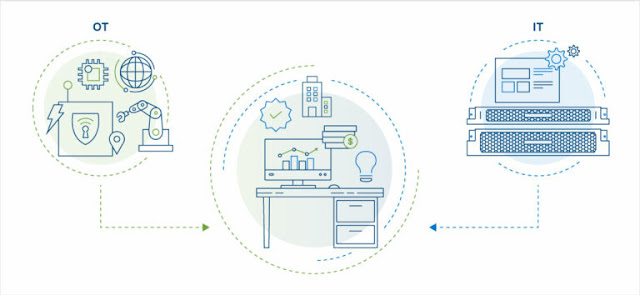
However, within these industry verticals, IT organizations are drowning in complexity at the edge. Vendors, analysts and solution providers have typically addressed use cases for operational technology (OT) groups individually, installing dedicated, siloed devices and controllers for each application or use case.

This situation doesn’t just create silos and complexity for IT by creating an environment with disparate management and support needs. It doesn’t just impede the free flow of information throughout the organization by trapping data in discrete systems. It doesn’t just endanger security by expanding and splintering the attack surface for cybercriminals. It also hurts OT, because by running these operations on separate stacks, they are giving up performance and efficiency gains that could be achieved by running on a modern, consolidated infrastructure that provides more performance and reliability than single systems alone can muster.

Dell EMC Study Materials, Dell EMC Career, Dell EMC Learning, Dell EMC Skill, Dell EMC Jobs, Dell EMC Preparation

Dell EMC Study Materials, Dell EMC Career, Dell EMC Learning, Dell EMC Skill, Dell EMC Jobs, Dell EMC Preparation

For OT, that means looking beyond their own functional responsibilities and realizing that unifying the underlying infrastructure provides better performance, reliability, security and scalability than going it alone. For IT, that means understanding that OT has very real concerns and needs around their individual activities, and these can be recognized and better served by using years of IT experience and best practices to simplify the edge and provide universal access to consolidated IT resources.

Adopting a modern, consolidated infrastructure breaks through data silos and gives you a common platform from edge to core to cloud. This helps you:

◉ Do more with less. Breaking down infrastructure silos means that you can actually do more with less by consolidating applications onto less infrastructure that is more efficient to administer. It also enables high availability and higher performance at a lower total cost. The result is a better platform for all applications.

◉ Simplify management. The proliferation of vertically integrated, purpose-built solutions can create a management nightmare that requires dealing with multiple vendors for support. The consistency of a unified infrastructure simplifies management and reduces operational costs. Simplifying and standardizing IT with a building-block approach and unified management tools will also allow you to scale more easily as you grow and add different use cases while maintaining the same management experience across the entire infrastructure.

◉ Reduce security risks. Distributed data and infrastructure expand the cyberattack surface and increase complexity, making security a challenge. Consolidating infrastructure enables stronger end-to-end security by enabling IT to secure a reduced infrastructure landscape in a consistent manner.

If you’re ready to standardize and consolidate infrastructure into a powerful system that can deliver benefits across your organization, be sure to look for the right partner. One with an end‑to‑end‑to‑edge vision backed by proven expertise, a complete portfolio of solutions, and a rich, open partner ecosystem to help you unlock value for your diverse use cases.

Source: dell.com
Sunday, 13 March 2022

Is Your Industry Ready for Edge?

In my role as an advisor on Internet of Things (IoT) and smart cities, I often get asked “What trends will shape my industry in the next five years?” The answer is applicable to every industry — data and your ability to create a competitive edge from that data.

We live in the data era, characterized by an explosion of data sources and the race to collect data — both from us and about us — and innovations in analytics and artificial intelligence (AI) that help us extract more value from data. One of the hottest topics we discuss with customers in this context is the edge. Although there are many definitions of edge, I prefer a simple one that describes edge as any place where data is acted on near its point of creation to generate immediate, essential value.

The ultimate goal is to generate new business insights and move toward becoming a data-driven organization. Edge will be an important factor in making this happen. IDC predicts that by 2024, due to an explosion of edge data, 65% of the G2000 will embed edge-first data stewardship, security and network practices into data protection plans to integrate edge data into relevant processes. This is very significant as it means a shift of focus on many fronts. Your organization will have to consider what data to capture at its edge locations — such as branches for banks and stores for retailers. You will have to think about what infrastructure will host the data, where that infrastructure will run, what applications are needed to analyze the data and, most importantly, how to manage and secure these remote edge locations.

A key discussion we often have with customers is about what business insights their data can provide. The answer is dependent on the industry, the use case and the individual company’s needs and capabilities. We often refer to specific use cases in each industry to show customers the potential of data, but what we end up with might be a completely new scenario that is very specific to that customer’s environment. The following are just a few examples.


The retail edge


In retail, the use of video analytics and computer vision has made it feasible to collect insights on customer behavior at the retail store level. This data, collected at the edge, can inform many departments within the retailer. Marketing can understand customer demographics in relation to the time of day, the weather or local events and deliver targeted content accordingly. Operations can use computer vision to detect unusual customer behavior and inform the store manager in real time. The customer experience department can analyze information on total store foot traffic, link it to actual sales and possibly change a store layout in response. Analyzing video data at the edge is key for these use cases because it’s not practical or cost effective to transport video data to a central location for analysis.

The healthcare edge


Healthcare is another vertical where edge use cases are gaining traction. Hospitals are looking for real‑time tracking of people and assets and combining it with other sources of data to generate meaningful insights. A use case we worked on recently started as patient and staff tracking but turned out to be extremely useful for compliance. By combining edge data on staff and patient location with sanitizing station events, the hospital was able to confirm, with data, that the staff has performed the sanitization protocol before attending to the patient. In another use case, advances in AI along with digital pathology are enabling pathologists to speed their image analysis, all while reducing human error. This analysis requires powerful GPU-enabled servers that are sitting at the edge, where the images are produced.

The manufacturing edge


In the manufacturing industry, where margins are tight and competition is fierce, many manufacturers are looking for ways to optimize their operations, minimize waste and create a better workforce experience. Data is leading them to deep operational insights driven by edge analytics. By collecting real-time data from programmable logic controllers (PLCs), edge analytics is enabling the monitoring of manufacturing process quality and providing early warning should something go wrong on the production line. For example, a steel factory we recently engaged with plans to deploy edge analytics to minimize irregularities in the steel beams it produces, which will result in significant savings in cost and time.

The edge is for every industry


Whatever industry you are in, you can bet edge will play a role today, and in the future, to drive efficiency and innovation through data. Be sure to start looking at what data you have and what insights you could generate, to stay competitive in the new data era.

Source: dell.com

Thursday, 3 March 2022

The Manufacturing Edge: The Nexus of IT and OT

Dell EMC Study Materials, Dell EMC Guides, Dell EMC Prep, Dell EMC Career, Dell EMC Skills, Dell EMC Jobs, Dell EMC Preparation Exam

Driving outcomes at the edge

For many organizations, edge computing is the key to leveraging new data sources that drive specific and differentiated business outcomes. Bringing more sophisticated capabilities to the edge enables you to generate exciting new opportunities. But success at the edge requires understanding of how the manufacturing edge is different from traditional clouds and data centers.

Defining operational technology

Successful edge computing requires connecting with, understanding and interpreting the operational technology (OT) space — that is, the technology that is used on the factory floor. This will spark new conversations that IT typically hasn’t had before. That’s because the focus in the past has traditionally been on IT infrastructure. Any OT products and solutions at the edge have historically been things like industrial PCs or internet of things (IoT) gateways. But now, the needs of the industrial edge are changing, providing an opportunity to unify the IT and OT landscape as never before.

Speaking to OT needs

A proliferation of sensors, programmable logic controllers (PLCs), robotics and automation are driving the need for newer technologies to manage, monitor and maintain these devices in a much different way than has been done in the past. In addition, the need for automation, analytics, predictive maintenance and operational efficiency on the factory floor is also driving demand for technologies that may have been considered to be owned by enterprise IT in the past. For example, graphical processing units (GPUs), neural processing units and tensor processing units can help OT inference and respond in real time or near real time at the edge, where data is created and where these systems live. Delivering the greatest possible value requires moving enterprise IT technologies into these OT environments.

Edge solutions such as the Dell Validated Design for Manufacturing Edge with Litmus or PTC are doing just that. Solutions like these drive efficiency on the factory floor by aggregating data and providing immediate insights that enable quick responses to problems that could cause a slowdown in production or an increase in defective products.

Where in the past Dell Technologies has excelled at helping customers modernize, automate and transform the data center, we’re now bringing that same set of principles and those same outcomes to the factory floor and doing it without creating silos of management, orchestration, automation or monitoring.

Creating a nexus of IT and OT

The latest data center technologies — such as faster processors, higher capacity and faster drives and accelerator cards — enable faster responses to data-driven insights. Now it’s time to look at applying these data center advances in a meaningful way to the edge — in this case, factory floors.

As we carry this technology over from IT to OT, Dell Technologies can help you do a few very specific things:

◉ Bring our “modernize, automate and transform” experience from the data center to the factory floor.

◉ Unify management, orchestration and automation to create a true fabric across OT and IT.

◉ Microsegment the IT and OT environments to protect against issues like inappropriate data access, network intrusion or performance degradation.

While this nexus of OT and IT presents a few challenges, it also presents a number of opportunities.

Dell EMC Study Materials, Dell EMC Guides, Dell EMC Prep, Dell EMC Career, Dell EMC Skills, Dell EMC Jobs, Dell EMC Preparation Exam

Changing the conversation


Creating a nexus of OT and IT requires connecting the CIO, IT director, and storage, network or server administrators with the COO, production line manager, factory manager or manufacturing design engineers. These are the people who are designing the products, operating the production lines and managing the supply chain to deliver the products and solutions that customers need.

The evolution of IT to include OT will drive new business outcomes in a way that is truly valuable. IT and OT leaders should be looking for ways to unify IT and OT, because if you can bridge that gap with  distributed compute fabric, end-to-end servicing and an end-to-end infrastructure platform — and do it in a simplified and differentiated manner — you will ultimately drive more value.

Helping manufacturers drive differentiated outcomes


IT and OT may be different, but there are common needs and a common understanding that we can help build across this whole landscape, with complete, unified and evolved solutions that can help your business operate and navigate in the new technology landscape.

Source: dell.com

Tuesday, 8 February 2022

Urban Foundations for Next-Gen Mobility

Dell EMC Study, Dell EMC Study Materials, Dell EMC Prep, Dell EMC Career, Dell EMC Skills, Dell EMC Jobs

Mobility and urban development have a symbiotic relationship

Ever since the mainstreaming of the motor vehicle at the turn of the previous century, mobility has played a pivotal role in urban development and vice versa. Increased private vehicle ownership, as well as investments in public transit networks and urban road infrastructure, have significantly influenced the shape of today’s urban fabric – city design, economic growth and opportunities and overall quality of life.

These same advancements in urban mobility, however, have also contributed to the challenges that the cities of today are trying to address – increased traffic congestion, longer commute times, higher greenhouse gas emissions and higher numbers of traffic accidents.

And we expect these trends to continue to accelerate with increased urbanization. By 2030, the United Nations estimates that megacities (metropolises with at least 10 million residents) will be home to more than 750 million people globally, a 35% increase from today. According to the World Economic Forum, the number of cars worldwide are set to increase from 1.1 billion in 2019 to 2.0 billion by 2040.

Given this rapid growth coupled with aging urban infrastructure and constrained budgets, city planners need to adopt more innovative and efficient approaches to addressing these challenges and enabling a modern, safe, convenient and sustainable urban mobility ecosystem for the future.

Technology and data are enabling new possibilities

As many modern technologies like IoT and edge, 5G and artificial intelligence mature and converge, we are witnessing data-led disruptions in many parts of the urban mobility ecosystem – ride hailing and sharing, advanced traffic management systems, mobility-as-a-Service, e-tolling, contactless public transit payments and micro-mobility to name a few.

Further advancements in alternative fuel technologies, including electrification of the vehicle fleet and mainstreaming of autonomous passenger and freight mobility, promise to further disrupt existing mobility paradigms.

These disruptions will in turn have a significant and positive cascading effect on other aspects of city administration and operation. We anticipate such improvements as:

◉ Integrated, efficient and safer urban traffic management and operations, with real time situational awareness and integrated incident response capabilities.

◉ Reduced pollution and emissions through sustainable mobility approaches like electric vehicles and advanced public transit systems.

◉ Greater citizen convenience through innovative mobility solutions and services such as seamless and multi-modal mobility-as-a-Service and contactless payments.

◉ New urban planning approaches that can support and grow next generation urban mobility technologies like autonomous mobility, vehicle-to-everything communication and drones.

This transformation will be a multi-year journey

◉ Focus on the outcomes. It is important that cities understand and prioritize citizen expectations and set medium to long-term visions and roadmaps that clearly define specific, achievable outcomes.

◉ Identify key proven and validated solutions. Identifying the right solutions and partners in today’s highly fragmented and diversified solution ecosystem may pose a key challenge for cities. Having the right approach to solution and partner selection, while ensuring the reliability, sustainability and scalability of solutions is critical.

◉ Start small but plan for scale and future. Lack of funding is often a key constraint that prevents many projects from taking off after the proof-of-concept stage. An agile, modular solution approach that enables cities to start small (for example, modernizing traffic flow at a single intersection to assess the value to the local community) but scale over time can enable cities to accommodate growth while also providing the flexibility to adapt as necessary.

◉ Integrated platform-driven approach toward “system of systems”. As cities embark on their digital transformation roadmaps one outcome at a time, they risk building siloed solutions – across vendors, technologies, etc. Having a consistent, open and modern platform-driven approach that integrates these multiple systems (traffic management, violation enforcement, public transit operations and more) into a “system of systems” and leverages the cross-domain data efficiently across multiple solutions is critical to realizing the true value of this transformation.

◉ Cybersecurity. As cities get digitized and data becomes ubiquitous, securing the city’s assets and citizens from potential cyber threats has become a critical agenda for administrators. This, along with the need to ensure citizen trust and data privacy, makes it critical that cities adopt solution architectures that incorporate data security and privacy as native features.

We are at the cusp on a significant technology disruption in the mobility sector which promises some unprecedented outcomes for the betterment of our cities. This, in turn, necessitates that cities adapt and transform multiple facets of their operations and administration and is going to be a complex, iterative and multi-year journey. It is therefore critical for cities to adopt a strong digital foundation that is agile, scalable, modern, future-proof and secure while also engaging with an ecosystem of partners who are aligned to this approach and can enable cities to deliver real citizen outcomes and evolve into competitive and thriving modern societies of the future.

Source: dell.com

Tuesday, 1 February 2022

What Does Remarkable Healthcare Look Like?

Dell EMC Study Materials, Dell EMC Career, Dell EMC Preparation, Dell EMC Skills, Dell EMC Guides, Dell EMC Jobs

Wireless communications have a long history in healthcare, dating back to the first wireless pagers developed for doctors in the 1950s. But with 5G technology, mobile service providers have the potential to redefine the future of healthcare. Doctors delivering in-home healthcare through mobile video, accelerating drug trials by using “virtual” patients and AI systems that can make life-or-death decisions are just some of the potential 5G applications that healthcare providers around the world are studying.

Some of this is happening today over 4G but what’s so special about 5G technology?

◉ It’s 100x faster than 4G.

◉ It’s 200x more responsive than 4G.

◉ It can support up to one million connected devices in a single square kilometer.

◉ It can deliver millions of different network experiences through network slicing.

◉ It can host applications at the edge of the healthcare network to handle powerful real-time processing at the point of need rather than backhauling data over the internet and losing precious time.

Envisioning better healthcare with 5G

Dell EMC Study Materials, Dell EMC Career, Dell EMC Preparation, Dell EMC Skills, Dell EMC Guides, Dell EMC Jobs
Capabilities like these capture the imagination, and healthcare providers have already imagined some very exciting ways to use 5G services to improve care. For example, clinical researchers are looking at ways that 5G technology can help improve drug trials. By collecting data from smartphone apps and wearable devices, pharmaceutical companies can create a digital twin of trial participants and process data in real time rather than collecting clinical data through a lab or fixed facility. This can dramatically speed up the development and approval of new drugs which is critical for healthcare providers in the years ahead.

Remote healthcare is another area where 5G has the potential to be both a game-changer and a lifesaver. With the low latency, high bandwidth and enhanced security that 5G provides, healthcare professionals can make video house calls with patients without fear of dropped connections, choppy audio or frozen screens. At the same time, healthcare workers can be tracking real-time readings from wearable devices, such as medical monitors and fitness bracelets, to get a full picture of patients’ health. Further into the future, doctors may even be able to perform remote surgery with the help of 5G communications.

Emergency healthcare services can also greatly benefit from 5G technology by enabling remote medical workers to treat traumatic injuries at the accident site. In the critical moments after an injury, the ability to bring in a broader medical team to assess and diagnose injuries can save lives and lead to better medical outcomes. Advance visibility into injuries also allows hospitals to better prepare the resources necessary for an emergency patient’s arrival.


We are helping to drive the future of healthcare


Dell Technologies is no stranger to hospitals and healthcare. Over 10,000 hospitals around the world rely on Dell Technologies healthcare solutions. For example, two out of three hospitals use Dell desktops or laptops and Dell EMC storage solutions. And nearly one in every two hospitals is running a Dell EMC server.

Today, we’re extending our technology commitment to healthcare providers by working with industry-leading partners to build the 5G solutions of tomorrow. Our Open Telecom Ecosystem Lab (OTEL) is a new state-of-the-art facility where 5G software/hardware vendors and enterprises can come together to build, test and validate solutions for healthcare and other essential applications. By bringing our experience in hardware, data-driven intelligence and automation to bear on 5G healthcare solutions, Dell Technologies is helping to bring healthcare closer to everyone.

Source: delltechnologies.com

Sunday, 30 January 2022

Everything Begins at The Edge

Dell EMC Study Materials, Dell EMC Career, Dell EMC Skills, Dell EMC Preparation, Dell EMC, Dell EMC Edge

We live firmly in the cloud computing age. Our adoption of the cloud and familiarity with everyday tasks like file sharing and cloud storage demonstrates our reliance on cloud-based processing. While cloud has been touted as the solution to myriad processing challenges, it is no silver bullet. It has its own challenges – bandwidth and latency, both of which have implications on the operational costs for an enterprise as well as speed of delivery of services.

Enter edge computing, which brings compute, storage and networking closer to the source where data is created, enabling faster processing of data and consequently quicker decision making and faster insights. The edge promises to accelerate data processing in the cloud, although it should not be viewed as a cloud alternative. Instead, edge should be seen as complementary to the cloud.

While the early goals of edge computing centered around lowering bandwidth costs and increasing reliability, the growth of IoT-generated data and the rise of real-time applications that require processing at the edge are spearheading its growth. According to Grandview Research, the global edge computing market size was valued at US$4.68 billion in 2020 and is expected to expand at a compound annual growth rate (CAGR) of 38.4% from 2021 to 2028.

Evidently, edge is now everywhere – and the opportunities for edge computing are extensive.

Happening at the edge 

Any industry that generates data stands to benefit from the speed, scale and performance offered by edge computing. Take the financial services sector, where the use of edge computing technologies – coupled with Artificial Intelligence (AI), cloud and 5G – can provide banks with real-time insights to improve customer experience and enhance cybersecurity.

Edge computing also powers digital cities – enabling everything from intelligent traffic controls to the smart monitoring and management of water, waste and energy. With the help of the edge and AI, cities can even roll out advanced video, sensor and communication systems that offer round-the-clock monitoring of public spaces to efficiently maintain law and order.

Enterprises are in the perfect position to reap the benefits of data-driven innovation and services as 5G cellular connectivity, with its ultra-low latency and high bandwidth properties, takes hold in the region.

Future of the edge

The rise of the internet of things (IoT), smart devices and their synergy with 5G mobile networks have already resulted in the emergence of creative use cases for edge computing.

Strategic partnerships will be key to accelerating edge computing adoption, innovation and progress. For example, Dell Technologies is partnering with SK Telecom in South Korea on infrastructure that enables managed, private 5G network service. The collaboration will help customers use private mobility and edge computing to develop new services where data is created in industries that need reliable high-speed connectivity such as healthcare, retail and construction.

At iNET Corporation, an integrated telco service provider and Dell customer, data from drones and smart sensors is used to monitor construction sites. iNET was able to rollout a real-time edge monitoring solution with a streaming platform situated at a construction site that had no primary data center.

The Dell EMC PowerStore appliance deployed at the edge ingests, stores and analyzes real-time streaming data from the drones and smart sensors to make immediate decisions around resource allocation of equipment, material and people. iNET can also use the data to compare progress of the physical build alongside site renderings. Non-streamed data collected at the edge and sent to the storage appliance can be natively replicated to a larger appliance sitting at the core data center.

While focus is often placed on the edge’s geographic location, it is crucial to note that the edge is not a single entity, place or technology but a combination of components. With 5G technology adoption accelerating globally by 2024, the possibilities are immense, from clouds to edges to devices.

Edge is a “how” not a “where” 

Gartner, Inc. predicts that 75% of enterprise-generated data will be “created and processed outside a traditional centralised data center or cloud” by 2025. This will be done in an effort to process higher volumes of data produced by IoT devices and rapidly growing 5G networks.

Dell recently announced new edge innovations across our infrastructure and PC portfolio to help organizations simplify deployments and capture more value from data generated and processed outside the traditional data center and public cloud. These include:

◉ Dell EMC VxRail satellite nodes to extend automation and lifecycle management capabilities to smallest configuration to date for edge workloads.

◉ Dell EMC Edge Gateway which connects multiple edge devices across operational technology and IT environments to deliver real-time data insights.

With products and services engineered specifically for the edge, businesses can and will overcome constraints put forward by any challenging edge environment. The future starts today, not tomorrow – at the edge.

Source: delltechnologies.com